Cyberattacks in the education sector up 258% last academic year
Cybersecurity Threats in Education: How University Geek Squad Protects Schools
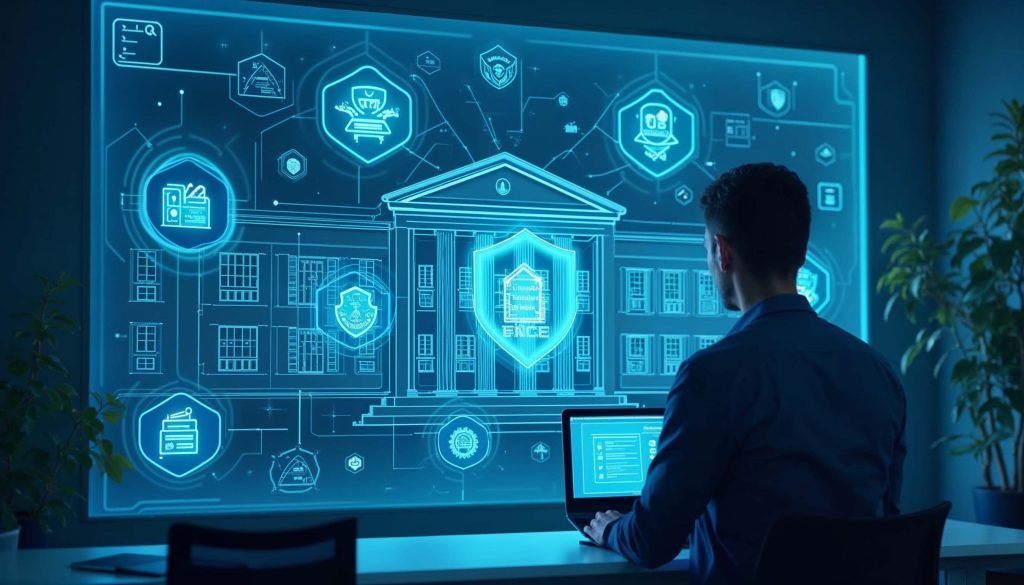
Cyberattacks and Cybercriminals are increasingly targeting educational institutions due to the vast amounts of sensitive data they handle, including student and employee records, research, and intellectual property. With limited technology budgets and often weak cybersecurity defenses, schools and universities are becoming prime targets for sophisticated cyberattacks, threatening their reputation and daily operations.
A Growing Cybersecurity Crisis in Education
According to Statista, the education and research sectors faced the highest number of cyberattacks in 2023, with an alarming weekly average of incidents. Verizon’s Data Breach Investigation Report (DBIR) recorded a total of 1,780 attacks over the past year, with 1,537 resulting in sensitive data breaches. This marks a 258% increase in total incidents and a staggering 546% rise in data breaches compared to the previous year. These figures highlight the urgent need for enhanced cybersecurity measures in educational institutions.
Recently, Highline Public Schools in Washington, serving around 17,500 students, had to suspend classes due to a cyberattack. The district detected unauthorized activity on its systems, disrupting key operations, including communications, school transportation logistics, and attendance records. While no evidence of data theft was found, the attack forced schools to cancel classes for several days, emphasizing the real-world consequences of cyber vulnerabilities.
How University Geek Squad Strengthens School Cybersecurity
The DBIR report identifies system intrusions, social engineering, and human error as the top attack vectors, accounting for 90% of security breaches in education. University Geek Squad provides tailored solutions to safeguard institutions with the following best practices:
1. Fortify Networks and Devices
Keeping software and hardware up to date is crucial for protecting against known vulnerabilities. University Geek Squad ensures:
Regular system updates and security patches.
Content filtering and network segmentation to limit unauthorized access.
Secure password policies and management of personal devices (BYOD).
Separate Wi-Fi networks for personal, school, and guest devices.
Mobile Device Management (MDM) for enhanced security and regulatory compliance.
2. Cybersecurity Awareness Training
Human error remains a leading cause of breaches. Educating students, faculty, and staff is essential. University Geek Squad provides:
Regular cybersecurity training and simulated attack scenarios.
Security awareness programs for students, teachers, and parents.
Guidelines on safe use of personal devices and online platforms.
3. Advanced Cybersecurity Tools and Strategies
Schools need proactive solutions to detect and respond to threats in real time. University Geek Squad offers:
24/7 network monitoring and threat detection.
VPN solutions to secure off-campus connections.
Identity protection through role-based access and contextual security.
Multi-Factor Authentication (MFA) for an additional layer of defense.
As schools continue to adopt online learning platforms and cloud-based management systems, cybersecurity must be a priority. Implementing MFA with mobile authentication and push notifications simplifies access for students and faculty while reducing reliance on weak passwords. With centralized cloud-based security management, institutions can maintain complete control over access and tailor security policies to their needs.
At University Geek Squad, we are committed to equipping educational institutions with the tools and knowledge necessary to protect their digital environments. By proactively addressing cybersecurity challenges, we help ensure that learning continues uninterrupted, free from the disruptions caused by cyber threats.